Journal guide
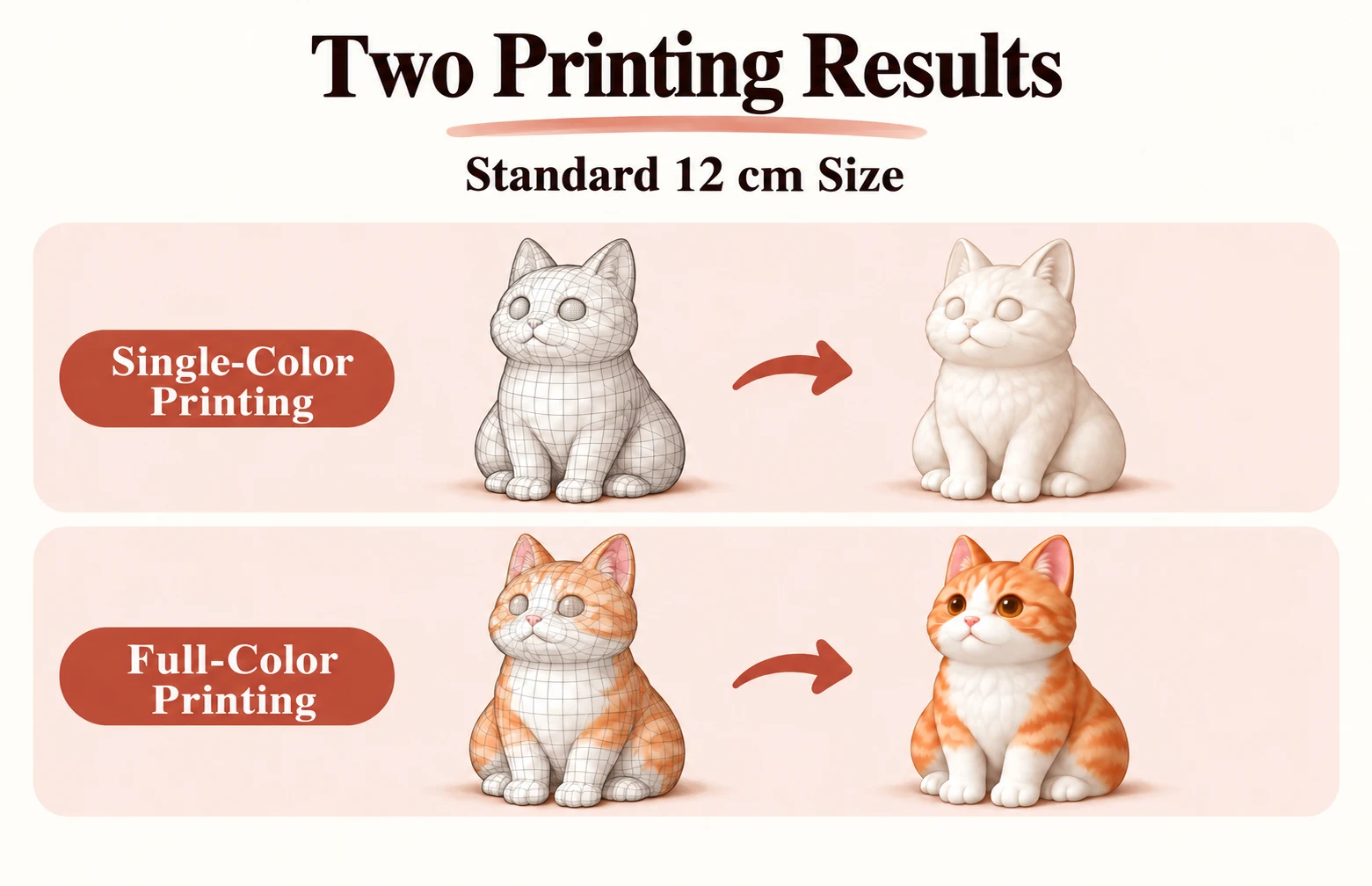
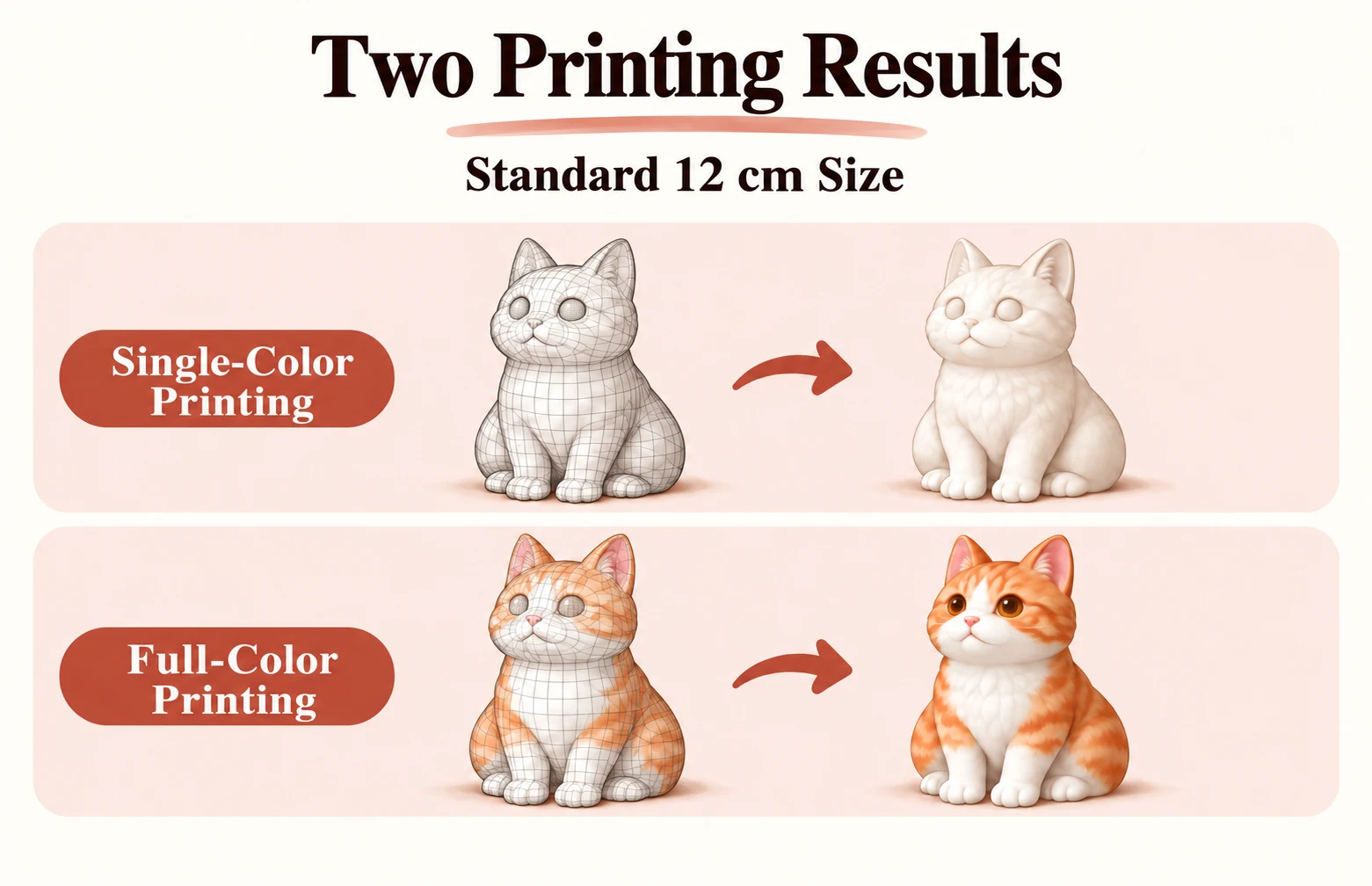
We use an industrial full-color photopolymerization 3D printer to make models in a 12 cm size. It can print both color models with multiple colors and patterns built in and single-color models. The colors of the color models are formed directly during printing, without the need for manual hand-painting afterward.
Below, we will first explain what kinds of finished models we can make, then briefly introduce how the printing process works and the characteristics of industrial equipment in terms of color, precision, and efficiency.
If you want a model with built-in colors: choose full-color printing
For example, as shown in the image, for an orange-and-white cat figurine, full-color printing can produce not only the three-dimensional contours of the ears, nose, and body, but also the orange fur, white belly, and eye colors.
If you prefer the sculptural look of an unpainted model: choose single-color printing
With single-color printing, your printed model will display only one color, but its contours and raised and recessed surface details will stand out, drawing more attention to its outlines and surface relief.
Therefore, “full-color” is a printing capability and does not mean that every piece must use multiple colors; the key is still your needs. Human figurines, pet ornaments, and display models with patterns are all possible applications of this type of 3D printing technology. How fine the details can ultimately be preserved also depends on your 3D model file and the structure of its shape.
Photopolymerization 3D printing can be understood simply as using light to cure and harden liquid resin, then building up a three-dimensional model layer by layer.
The material used inside the 3D printer is called photosensitive resin, a liquid material that solidifies when exposed to specific light. The model gradually takes shape through this layer-by-layer buildup. For example, the cat’s ears, nose, and body contours are all made this way.
However, it is important to distinguish that photopolymerization is only a method of forming resin into a shape and does not mean that the printed model automatically comes with colors. Conventional photopolymerization differs from full-color photopolymerization printing: the conventional process can only produce unpainted models in a single color.
Full-color photopolymerization 3D printing can also read the color information in the 3D file while creating the three-dimensional model, so the colors are printed together with the model in a single process.[1] For example, when printing a cat, full-color photopolymerization printing can create not only its body contours but also its orange fur markings, white belly, and eye colors.
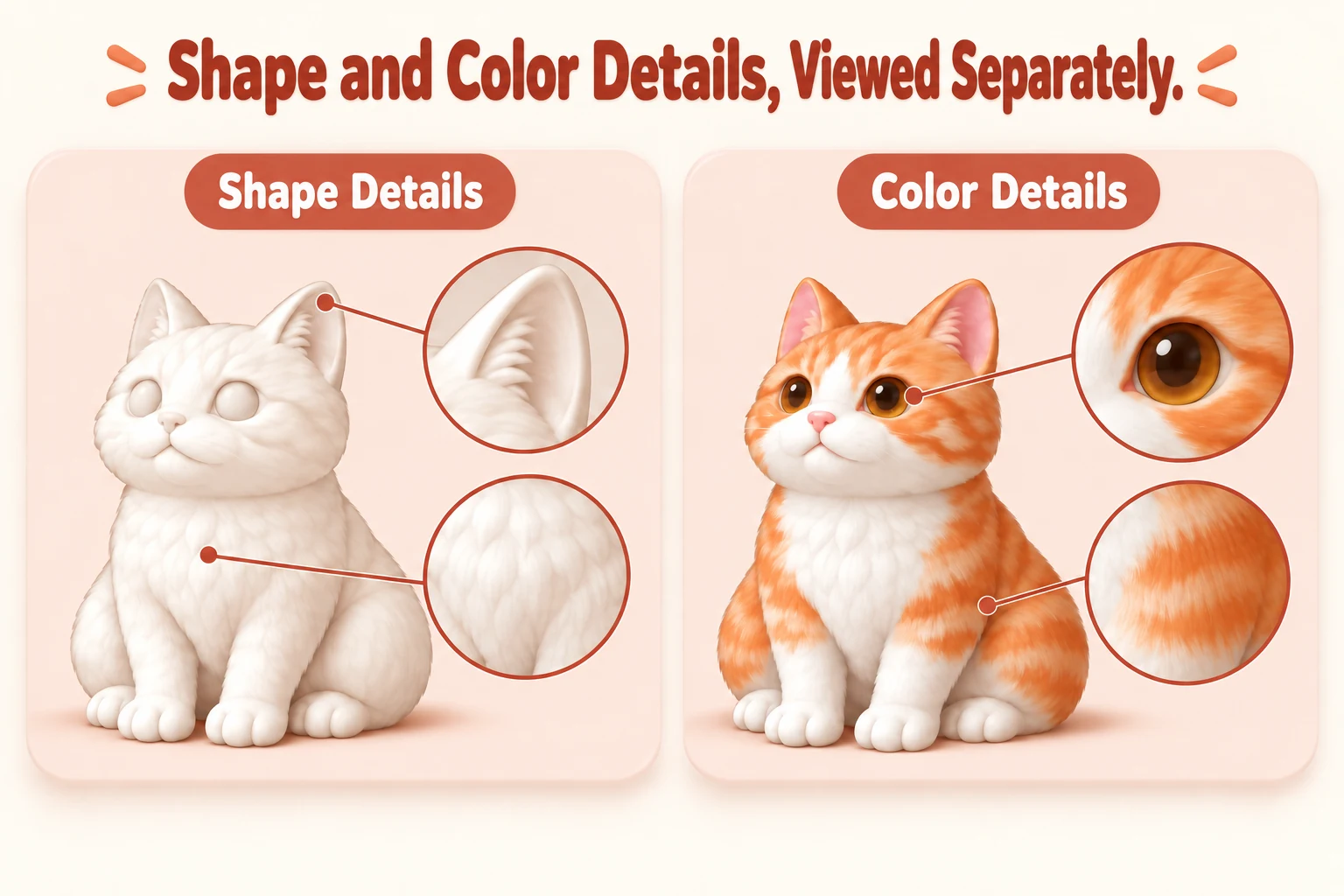
For shape details, look at contours and surface relief; for color details, look at color combinations and patterns.
3D printers can be broadly divided into two categories: industrial and desktop.
Ordinary home / desktop resin printers can only directly print single-color, unpainted white models. If you want rich colors, you have to wait until the model has finished printing and then apply the colors by manual spray-painting or hand-painting.
Industrial 3D printers are professionally designed and built for printing models in batches, with the aim of ensuring continuous, stable production, consistent results across multiple finished pieces, and higher production efficiency.
Linxi uses industrial full-color photopolymerization equipment; if you choose our full-color printing process to make your model, colors can be added to your model while its three-dimensional shape is being printed, without the need for hand-painting, reducing the steps involved in manual painting.
Our models all come in a standard 12 cm size, but the same size does not mean exactly the same amount of work is required to make them. The complexity of the model’s structure, the number of pieces to be made, whether a new 3D model needs to be created, and whether a color scheme needs to be developed all affect the final price. The preparation work for single-color and color models may also differ, and the specific price will be determined according to the actual circumstances.
The cost of industrial full-color printing includes model file processing, machine use and maintenance, consumables, and post-processing, among other things. Although our color models do not require manual spray-painting, producing the colors themselves also incurs costs.
When comparing quotes for different types of models, you need to confirm not only the size but also whether the price includes modeling, the colors of the finished product to be delivered, and other such details. If you would like to learn more about our models, you can first consider what shape you want, whether to choose single-color or full-color printing, and which detailed features must be preserved. You can also bring reference images when discussing your needs with us, which will help you explain the result you want more quickly.