Journal guide
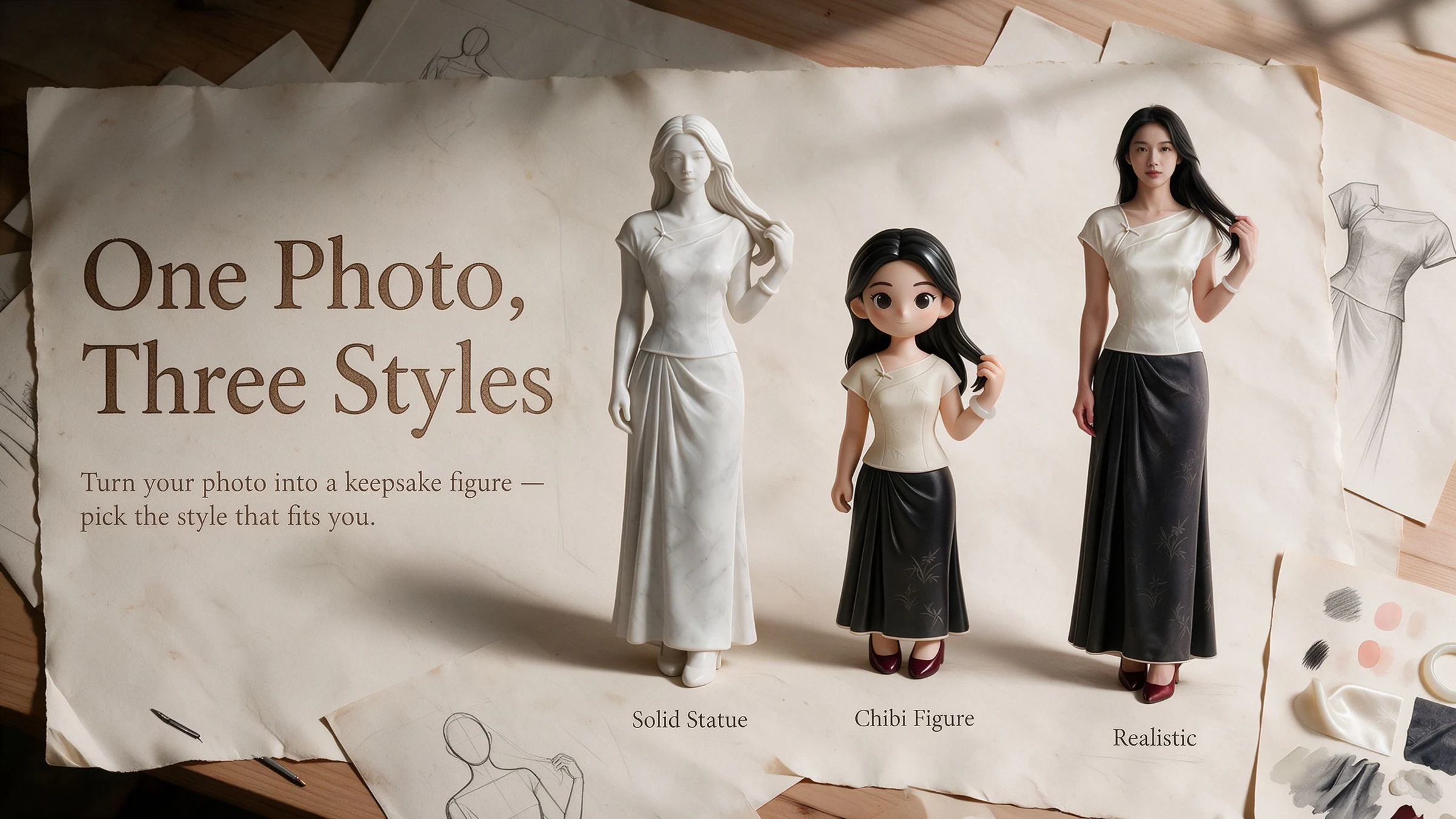
Realistic, chibi and monochrome sculpture styles can all work for portraits and pets. The harder question is which style best suits the photo you want to turn into a custom figurine.
Set the styles aside for a moment and ask yourself: What do I love most about this photo? The questions below can help you find your answer.
Realistic style: If you love the subject's slender build, natural head-to-body proportions or your pet's actual physique, start here. This style uses natural proportions to keep a direct connection to the reference photo. The seated pose, hand position and angle of the shoulders are all guided by the original image.
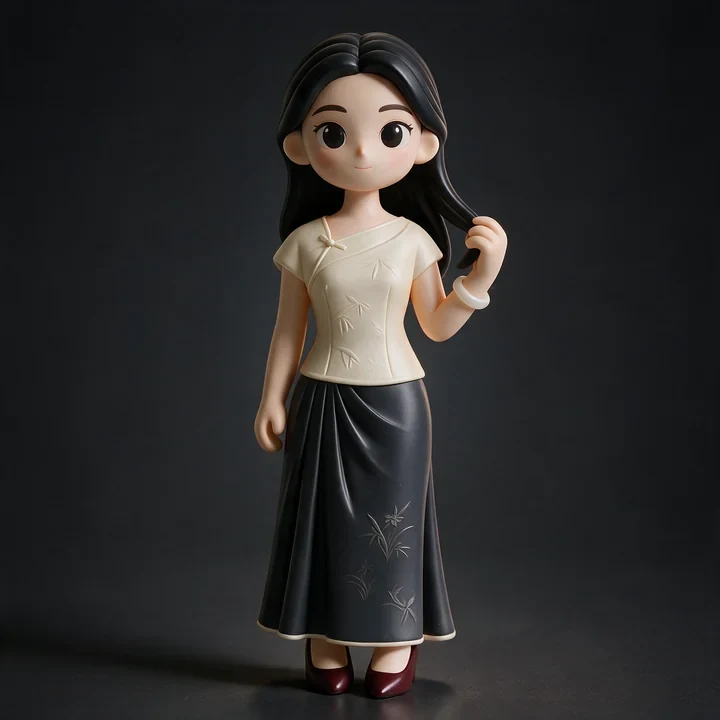
Chibi figurine: If you are comfortable with a larger head, a smaller body and a rounder shape, this style may suit you better. It makes the proportions cuter while aiming to keep recognizable details, such as a person's hairstyle, clothing and ear shape or a pet's coat-color pattern. If the photo shows only the upper body, the style completes the lower body based on the clothing shown so the figurine feels complete.
Don't choose chibi simply because it looks cute. The key difference between these two options is whether you are comfortable with changes to the model's proportions and details.
The monochrome sculpture style presents the figurine in a single color. It emphasizes the subject's overall shape and pose rather than expression or fine details.
Imagine turning your photo into one color. Would the feature you love most still stand out?
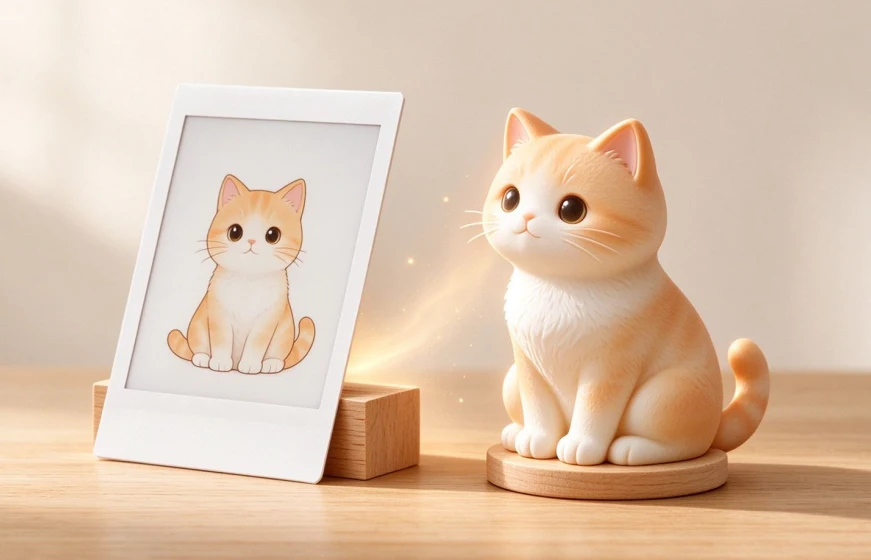
Suppose a pet photo shows a cat with distinctive markings on its face. If you love the darker fur on one side, a realistic or chibi style that keeps the color may be the better choice. If what matters more is the cat's seated outline and the way it lifts its head, a monochrome sculpture could be just right.
The same test works for a portrait. Imagine an old photo of an older family member. The color of his clothes may be part of what makes the image meaningful to you. If you want to keep those colors, choose a color-rich realistic or chibi style.
We offer two production options: ZhenCai (full-color photopolymer resin) and SuBai (white photopolymer resin). The first reproduces color; the second has a uniform white finish. Both use resin at the same level of precision, and the finished height is fixed.
Perhaps it is the outline of a lock of hair that flips outward, a longer face shape, or a pet's ears, with one folded and the other standing upright.
In a realistic artwork draft, check whether the facial structure and posture are close to the photo. In a chibi draft, check whether those defining features remain clear after the proportions change. In a monochrome draft, check whether the form alone, without the original colors, still conveys the likeness you want to keep.
Don't judge one style by another style's standards. Chibi simplifies and exaggerates; monochrome removes color; realistic style focuses on detail.
For the relaxed feel of a small companion on your desk, take a closer look at chibi. If you want to preserve the photo's natural appearance as a more formal keepsake, consider realistic style. If you prefer a unified color and enjoy taking in a sculpture's outline, monochrome may appeal to you.
There is room to be flexible. A chibi figurine can carry a meaningful memory, while a realistic one can make a lighthearted gift. Rather than following a rule about which style you must choose, consider your own taste or that of the person receiving the gift.
Chibi describes the figurine's proportions; it does not tell you what material the finished piece will use. Monochrome sculpture describes a single-color visual direction; it does not mean the piece is made of plaster or marble.
Here is how the process works:
· First, review the artwork draft and confirm the visual direction.
· Once you approve that direction, we generate an initial 3D model that you can click and drag to rotate and inspect.
· When you reach the production and packaging options, choose ZhenCai or SuBai, and check the finished height and packaging.
· Refinement and production come after that.
You choose the style at the first stage and the production method at the third, so you do not have to settle both at once. If you are unsure, start with the style closest to what you have in mind and adjust after viewing the artwork draft. If the direction does not feel right, the draft page also lets you regenerate it or switch styles. Check the page for any related credit usage.
A simple guide to choosing photos for your custom figurine, with tips on lighting, camera angles, and the personal details that help preserve a familiar likeness.
An example of headings, rich text, lists, quotations, images and tables in the Linxi Journal.