Journal guide

When you order a custom figurine from a photo, AI can reproduce the broad appearance of the clothing, pose, and other features. However, rotating the model and looking closely may reveal problems such as a side profile that does not resemble the person, unusually thick strands of hair, or fingers fused with the hair. Manual refinement primarily addresses these issues.
Understanding differences in likeness across views
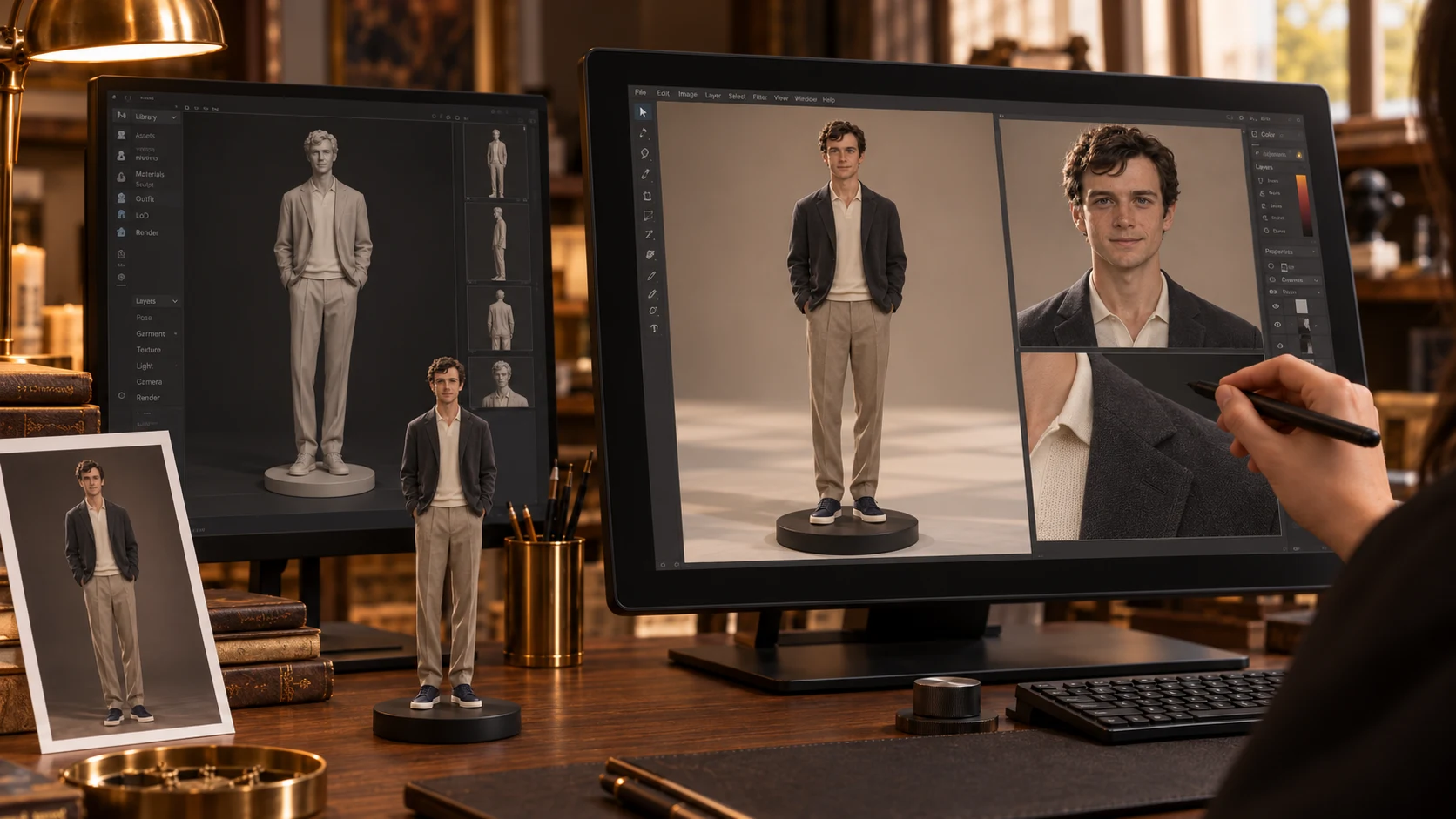
Creating a 3D model from a photo means turning a flat image into a three-dimensional object. The photo provides information about colors, outlines, and which parts overlap, but it does not directly reveal thickness, depth, or the side and back views. AI must infer these hidden areas and build the model from those assumptions. As a result, the finished model may look very similar from the front but less accurate from the side.
How the back of the figurine is developed
As explained above, AI must infer the hairstyle at the back, clothing folds, and obscured areas, then build the model from those assumptions. During manual refinement, the modeler can check whether the overall posture and body shape are reasonable, but cannot know what the back of the person in your photo looks like without supporting information. If a small detail on the back is especially meaningful to you, you can describe it in the feedback box during the refinement stage. Whether that detail can be added, and how the model should be adjusted, must be confirmed by our team. We will do our best to include these details where our capabilities allow.
The work carried out during manual refinement
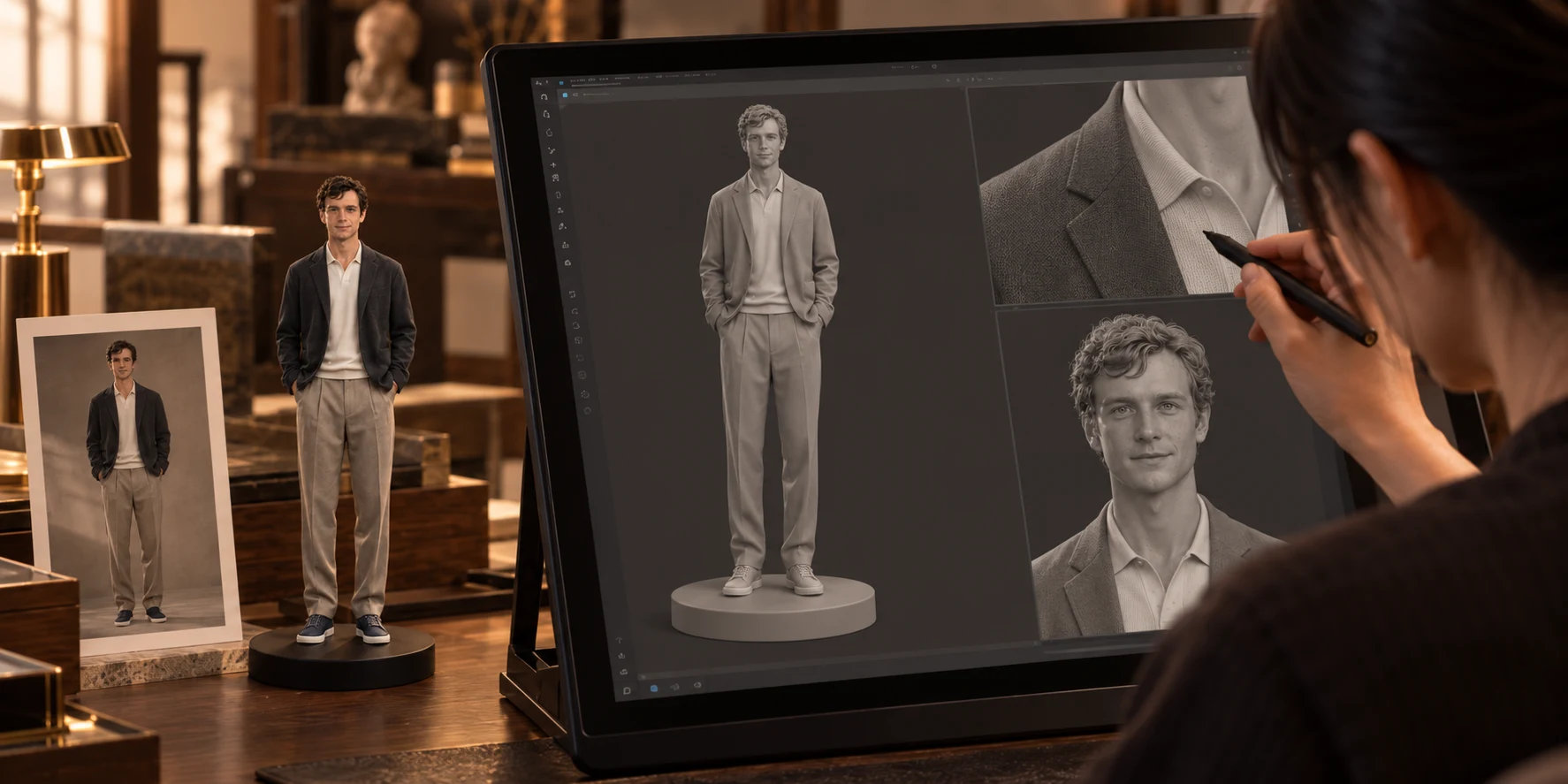
Manual refinement does not simply mean rebuilding the figurine from scratch. It involves making appropriate adjustments to the existing model to improve likeness and correct its structure for printing. The main tasks are described below.
1. Correcting the appearance: If the cheeks are too wide, for example, the modeler adjusts the contours against the original photo. If the hair is too thick, the modeler reduces the volume of the hair sections and corrects the direction of the strands. Lines such as the neckline, shoulder line, and skirt hem are corrected locally as needed.
2. Checking the structure: Areas where parts of the subject overlap in the photo need to have a coherent arrangement in the model. Problems such as fingers fused with hair, limbs intersecting other parts of the model, or distorted bumps and hollows in a skirt hem must be repaired individually.
3. Preparing for 3D printing: The modeler carefully assesses and adjusts areas that are too thin, such as hair tips or clothing hems, as well as components that are not securely connected to the main body. These adjustments must balance appearance with printability.
Understanding what is preserved and adjusted
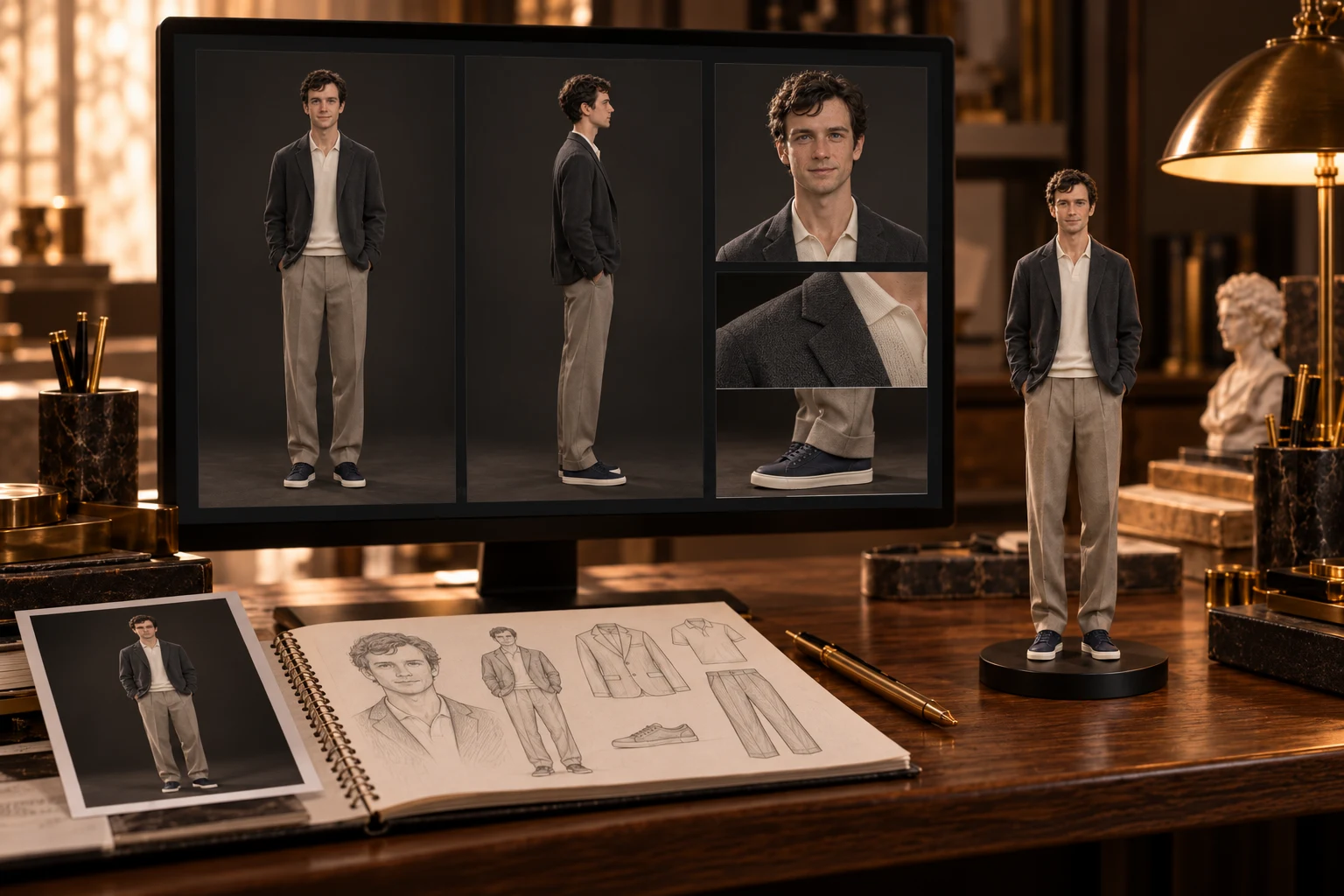
After the initial model is created, parts you are already happy with can be left as they are. For areas you would like changed or details you want added, we need to assess what can be modified or added based on the visible information in the photo and the requirements for printing. The modeler will prioritize differences that affect recognizability, a natural appearance, or structural integrity.
For example, the hair in the photo may lie close to the head, while the model has overly puffy hair on both sides. In this case, the modeler will first reduce the volume and adjust the direction of the strands, rather than add more strands.
When submitting feedback, specify the viewing angle, the differences from the photo, and the parts you would like to keep. This helps the modeler bring the model closer to the original photo. For example: “From the front, the cheeks look wider than in the photo. Please adjust them using the original image as a reference, while keeping the model’s current smile. The hair is too puffy on both sides; please bring it closer to the head and make the arms slightly slimmer. Keep the clothing and standing pose unchanged.”
This is only an example of how to write your feedback, not a guarantee of the result. The extent of any changes to a custom figurine must be assessed case by case, based on the model.
No. In Linxi’s photo-based custom figurine process, after approving the initial model, you need to place your order and make payment. Manual refinement begins only after payment. You will then review the refined model, and printing starts only after that review is complete. The review deadline and the conditions for starting production are governed by the current terms of service and your order notifications.